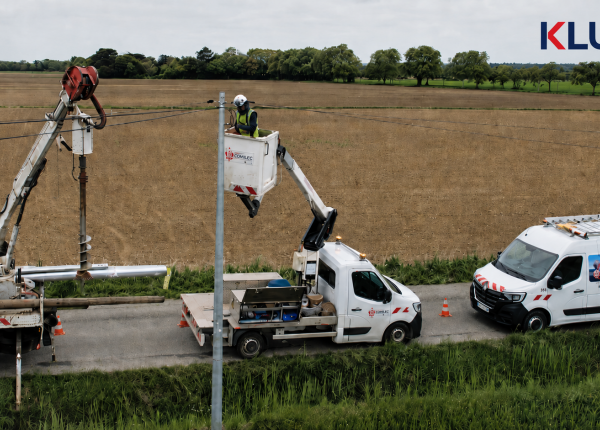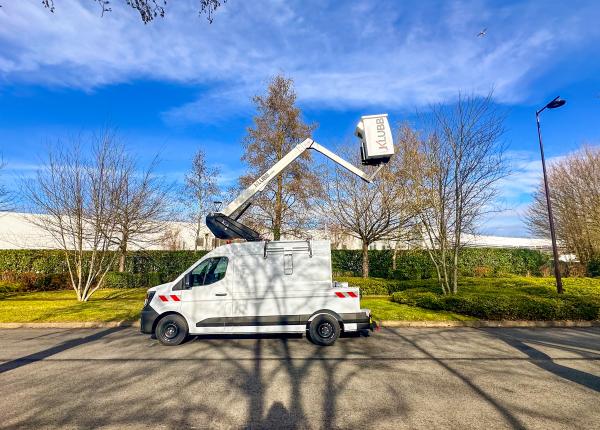







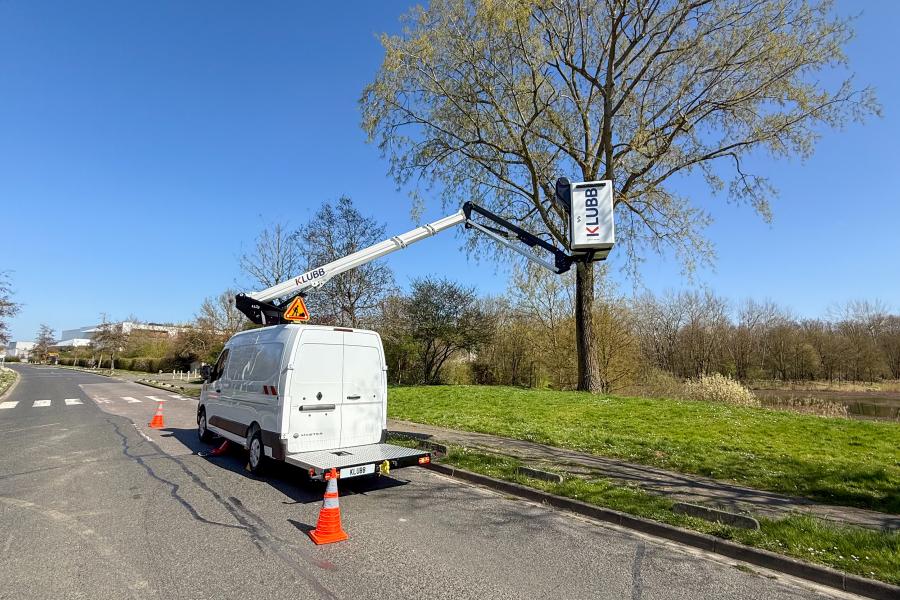
In 2024, IPAF recorded 170 major incidents involving MEPs worldwide, including 100 fatalities. In France, INRS data indicates that 220 accidents involving mobile elevating work platforms occurred in 2020 alone, 19 of them fatal. Among the recurrent contributory factors were pedestrians or vehicles encroaching upon the machine’s operating envelope because the exclusion zone had not been properly determined and demarcated.
Yet, if you were to ask a safety practitioner, “what is the regulatory size of a MEWP exclusion zone?”, the answer might well be unexpected. French legislation does not prescribe any fixed distance in metres. Neither the Labour Code, nor CNAM Recommendation R486A, nor Standard NF EN 280-1 lays down a definitive dimensional requirement. What the regulatory framework does impose, however, is a governing principle: the zone must be defined in accordance with the risk assessment specific to each individual operation.
That is precisely the purpose of this article. We will set out the reasoning used to determine the appropriate extent of such a zone, identify the reference dimensions that nonetheless exist in certain circumstances, explain how pedestrian access should be controlled, and examine the means by which the area may be physically delineated on site.
“Operating area” and “exclusion zone”: two concepts not to be confused.
Before stepping onto site, one point must be clarified, as many operators still conflate the two. The operating area and the exclusion zone are not one and the same.
The operating area: the MEWP’s three-dimensional working envelope
The operating area refers to the entire three-dimensional space within which the MEWP moves in order to carry out the task. It encompasses:
- the ground footprint of the carrier chassis and any deployed outriggers;
- the full range of movement of the boom, including horizontal outreach, lifting height and turret rotation;
- the effective working height, namely the platform height plus the operators’ reach.
INRS is unequivocal on this point in document ED 801: the operator must be able to position the carrier chassis vertically in line with the work area, which means anticipating every possible boom configuration before the machine is even brought into position.
The exclusion zone: the prohibited perimeter
The exclusion zone is the restricted perimeter established around and beneath an operating MEWP, within which access by unauthorised persons is strictly prohibited. It necessarily encompasses the operating area, but extends beyond it by adding a safety margin proportionate to the risks identified.
Its purpose is to prevent four categories of accident that INRS data (Epicea) and IPAF records consistently identify among the most serious and most often fatal:
- falling objects or tools from the platform onto persons below;
- overturning or tip-over of the MEWP onto nearby pedestrians;
- collision between a moving MEWP and a vehicle or pedestrian;
- ejection of an operator from the platform following impact or oscillation, particularly through a catapult or pendulum effect.
Employers and duty holders are required to assess the risks associated with MEWP operations and to implement suitable control measures. In practice, this means establishing an exclusion zone whenever there is a foreseeable risk to pedestrians, other vehicles or nearby workers. IPAF guidance explicitly recommends implementing adequate exclusion zones as part of site planning and risk assessment, particularly where MEWPs are operating near traffic, other machinery or public areas.
How should the exclusion zone be sized?
This is the question everyone asks, and the answer is often an uncomfortable one: the regulations do not prescribe any fixed distance in metres. Neither INRS, nor the Labour Code, nor Standard NF EN 280-1 provides a universally applicable figure. IPAF itself uses the expression “of an appropriate size”, consistently referring back to the risk assessment.
This is not a legal grey area. It reflects a prevention-based approach: the size of the exclusion zone must be determined by the realities of the operation in hand, not by reference to a standardised template. The following are the key parameters on which that assessment should rest.
The factors that determine the size of your exclusion zone
1. Working height
The greater the working height, the larger the exclusion zone must be. The reasoning is straightforward: an object dropped from 20 metres may land well beyond the platform’s vertical footprint. Its trajectory will also depend on wind conditions, the nature of the object, and the movements of the boom. In its Toolbox Talk A26 on falling objects, IPAF underscores this direct relationship between height and the extent of the danger area.
2. The boom’s maximum outreach in all operating configurations
The exclusion zone must encompass the MEWP’s maximum operating envelope, including any rear counterweight or tail swing. A common mistake is to cordon off only the platform side and overlook the fact that the boom can slew. On a Group B MEWP, such as a multi-directional articulated boom, turret rotation may cause part of the structure to extend several metres into an area that had not been anticipated.
IPAF expressly recommends favouring MEWPs with zero tail swing or with slew restriction wherever space is limited.
3. The nature and volume of nearby traffic
In public spaces or on the highway, the exclusion zone must be sized with due regard to actual traffic conditions: the number of pedestrians, the presence of vulnerable persons, including those with reduced mobility and children, the intensity of vehicular traffic, and the dimensions of lorries or buses liable to pass nearby. An exclusion zone that is somewhat overgenerous is always preferable to one that proves too narrow.
4. Weather conditions
Wind is a factor that is frequently underestimated. It operates on two levels: it can compromise the stability of the MEWP itself once the manufacturer’s wind-speed limit is exceeded, and it can also alter the trajectory of falling objects. HSE guidance recommends inspecting the platform and reassessing the work area after severe weather conditions.
The exclusion zone must always encompass the MEWP’s full maximum footprint in all operating configurations — with the boom oriented in any direction, outriggers deployed, and any counterweight or rear overhang taken into account — together with a safety margin proportionate to the working height, wind conditions, and the nature of the items or tools being handled. Where there is any doubt, the safer course is always to widen the perimeter.
Pedestrian access: who may enter the zone, and who must be kept out?
In principle, the answer is straightforward: no one should be permitted to pass beneath the platform or within the MEWP’s operating envelope. IPAF states this unambiguously in its Street Smart guidance: “Restrict access to pedestrians so that they cannot walk under the platform.”
In practice, however, access control will depend on the nature of the operation and the environment in which it is being carried out.
On a closed worksite or private premises
In this context, the exclusion zone is concerned прежде всего with managing simultaneous activities: other trades operating nearby, forklift traffic, and delivery vehicles. A ground assistant is mandatory for Type 1 MEWPs — that is, machines whose travel function may be operated from the platform — wherever the possibility of interaction with other site activity exists. Their role is threefold: to monitor the zone, prevent unauthorised entry, and operate the emergency ground controls should an incident arise.
In public spaces or on the public highway
This is where pedestrian management becomes most complex. IPAF devotes an entire document to the issue (TE-1095-0222 – Safe Use of MEWPs in Public Areas) and sets out a number of specific recommendations:
- have the site assessed by a competent person before work begins, taking into account expected traffic volume, pedestrian routes and the presence of vulnerable persons;
- divert pedestrian flows by means of clear temporary signage, while maintaining an unobstructed walkway at least 1 to 1.5 metres wide;
- consider appointing a professional traffic management company for lengthy operations or those carried out in high-traffic environments;
- obtain the necessary permissions from the relevant highway authority before occupying any part of the public realm;
- wear high-visibility clothing, which is mandatory for all personnel working on the public highway.
In certain cases — such as a busy junction, a lone tradesperson, or a MEWP with substantial outreach — it may be necessary to go as far as partially closing the carriageway with temporary traffic lights. That is not a disproportionate constraint; it is a proportionate response to a very real risk.
Where the working height no longer allows direct visual communication between the operator in the platform and the ground assistant, a radio link becomes essential. This is a point too often overlooked on site. If the MEWP operator cannot see what is happening below — and that is frequently the case from a height of 10 to 12 metres upwards — the ground assistant effectively becomes the operator’s eyes. Without a reliable means of communication, that role is fundamentally compromised.
Marking out the zone: what equipment should be used?
Cordoning off an exclusion zone does not mean placing two orange cones on the ground and considering the matter closed. The zone must be made clearly visible, physically effective and proportionate to the level of risk. The following are the measures commonly recommended by INRS and IPAF, depending on the operating environment.
Suitable equipment for demarcation
Barrier tape and traffic cones
These may be suitable for rapid demarcation on a closed site, where external traffic is limited and simultaneous operations are properly controlled. Barrier tape remains easy to cross: it warns, but it does not prevent entry. For that reason, it is insufficient on its own in public areas or wherever the risk of collision is significant.
Rigid barriers
For work on the public highway, in urban environments, or wherever traffic levels are high, rigid barriers such as pedestrian barriers or concrete separation units become necessary. They create a physical segregation that neither an inattentive pedestrian nor a vehicle can cross inadvertently. IPAF makes this point clearly in its TE-1095 guidance: physical barriers constitute the primary level of protection, with signage serving as a complementary measure.
Temporary traffic signage
In public areas, approved temporary signs are mandatory. These may include signs prohibiting pedestrian access, directing pedestrian passage, or indicating directional restrictions. Their installation must comply with the rules governing temporary roadworks signage in the country concerned.
Illuminated demarcation for night work
Where work is carried out at night or in poor visibility, standard cones and barriers are no longer sufficient: illuminated demarcation becomes essential. Beacons, flashing lights, LED markers and reflective lighting devices may all be required. The objective is to ensure that the zone is visible from a distance and from every angle, including to approaching drivers.
High-visibility clothing and radio communication
Two further items of personal or operational equipment systematically complement the demarcation arrangements:
- high-visibility clothing, at least Class 2, for the ground assistant and for all personnel working on or near an open road. This is mandatory wherever operations are undertaken on, or in close proximity to, live traffic;
- a reliable radio link between the operator in the platform and the ground assistant whenever direct visual communication is no longer possible.
Specific situations: public highways, electrical hazards and loading operations
Working on the public highway: do not improvise
Using a MEWP on the public highway involves prior formalities that many operators still underestimate. Before arriving on site, three steps are essential:
- obtain the necessary permit for temporary occupation of the highway from the relevant road authority or public body responsible for the site;
- define the traffic management and zone demarcation plan in advance;
- select a suitable MEWP: a machine with zero tail swing or fitted with slew restriction makes it possible to work closer to live traffic without encroaching upon it.
IPAF also stresses the need to take account of the dimensions of lorries and buses likely to pass nearby. A MEWP whose boom protrudes by as little as 20 centimetres into a live traffic lane may strike a heavy goods vehicle. This type of scenario is recorded in IPAF’s accident databases.
Working in the vicinity of overhead power lines
This is the scenario associated with the highest number of MEWP-related fatalities worldwide. IPAF identifies contact with overhead power lines as one of the four principal causes of death involving MEWPs, alongside overturns, entrapment and falls from height.
The rule is non-negotiable:
- No-go zone (strictly no approach): a minimum of 4 metres from any overhead power line (MAD – Minimum Approach Distance);
- Monitoring zone: from 4 to 6.4 metres, where movement may be permitted only under the strictest supervision and with additional control measures in place.
Where the work area falls within this perimeter, the safest course of action is to request that the electrical network be isolated by the relevant utility or network operator. No saving in time can justify the risk of contact with a live power line.
Loading and unloading the MEWP
The loading and unloading phase is often the most neglected when it comes to demarcation and access control. IPAF guidance is nonetheless unequivocal: the loading area must be of sufficient size, properly lit, set on firm and level ground, segregated from other work activities and traffic flows, and kept clear of unauthorised pedestrians throughout the manoeuvre.
A MEWP in the course of loading is inherently liable to instability. A partially retracted outrigger or a hydraulic ram still in the process of lowering are precisely the kind of intermediate configurations in which the machine may overturn without warning.
The five-step process: from assessment to site demarcation
The following is the operational framework that should be applied systematically before every intervention. It brings together the principles reflected in INRS guidance, CNAM Recommendation R486A and IPAF good practice.
Step 1 – Assess the site and evaluate the risks
Before anything else, observe the environment: ground conditions, gradient, traffic, working height, overhead obstructions, power lines, pedestrian presence and peak circulation periods. Where the operation falls within a formal prevention plan, this assessment must be documented, particularly where multiple contractors are working alongside one another. On a short-duration job, it may remain a structured mental check, but it must still be carried out.
Step 2 – Determine the size of the zone
On the basis of that assessment, define the MEWP’s maximum footprint in all operating configurations, including outriggers, maximum outreach and any rear counterweight. Then add an appropriate safety margin according to the working height and the type of exposure involved. Where overhead power lines are present, minimum approach distances must be applied without compromise.
Step 3 – Position and set up the MEWP
Select a standing position that allows the task to be carried out vertically in line with the target work area, while still leaving sufficient room for the exclusion zone to be established around the machine. Chock and deploy the outriggers in accordance with the manufacturer’s instructions, and verify that the machine is level. An initial movement at low height will help confirm that the boom does not foul any previously unidentified obstacle.
Step 4 – Demarcate and physically establish the zone
Deploy the demarcation equipment appropriate to the level of risk, as set out above. Access must be prevented from every side, including on the counterweight or tail-swing side. Make sure that the signage is visible from the necessary distance. On the public highway, the required temporary traffic management signage must also be put in place.
Step 5 – Maintain supervision throughout the operation
Demarcation is not a one-off action; it is a live control measure. The ground assistant monitors the zone, prevents unauthorised entry and reports any change in circumstances, such as the arrival of another machine, an alteration in traffic flow or the settlement of an outrigger. If conditions change, the zone must be reassessed and, where necessary, enlarged.
What the regulatory framework says: responsibilities and key references
The exclusion zone is not an abstract safety concept invented by prevention specialists. It sits within a defined regulatory and technical framework, even though no text prescribes a universal distance in metres. The following are the principal references.
International standards and reference documents
- NF EN 280-1: the principal European standard, including the classification of MEWPs by group and type;
- IPAF TE-1095-0222: Safe Use of MEWPs in Public Areas, a key reference document for operations in public spaces;
- HSE (United Kingdom): guidance on Mobile Elevating Work Platforms;
- ANSI A92.22-2018 (United States): Safe Use of MEWPs, including provisions relating to exclusion zones and operational responsibilities.
Who is responsible?
Responsibility is shared, but the allocation of duties is clearly defined:
- The employer is responsible for carrying out the risk assessment, putting the prevention plan in place, selecting suitable equipment, and issuing the authorisation to operate.
- The operator, duly trained and certified where required, is responsible for positioning the MEWP, establishing the exclusion zone, and monitoring the area at ground level.
- The ground assistant is responsible for maintaining the demarcation, controlling access to the zone, and carrying out emergency ground-control manoeuvres where necessary.
Establishing an exclusion zone around a MEWP is, above all, an exercise in professional judgement, not a box-ticking exercise. Three points should be borne firmly in mind.
1. There is no universally prescribed regulatory dimension
Only two numerical values are stated explicitly: a minimum clear pedestrian passage of 1 to 1.5 metres in public areas, and a 4-metre no-go distance from overhead power lines. For everything else, it is the risk assessment that governs.
2. The exclusion zone is a live control measure
It is not something that is put in place once at the start of the job and then forgotten. It must be monitored, maintained and reassessed throughout the operation. That is one of the core functions of the ground assistant.
3. Responsibility is identifiable and enforceable
The employer, the MEWP operator and the ground assistant each have a clearly defined role. In the event of an incident, the chain of responsibility will be examined closely. Demarcating the zone is not an optional matter of good practice; it is a formal safety requirement subject to assessment and accountability.