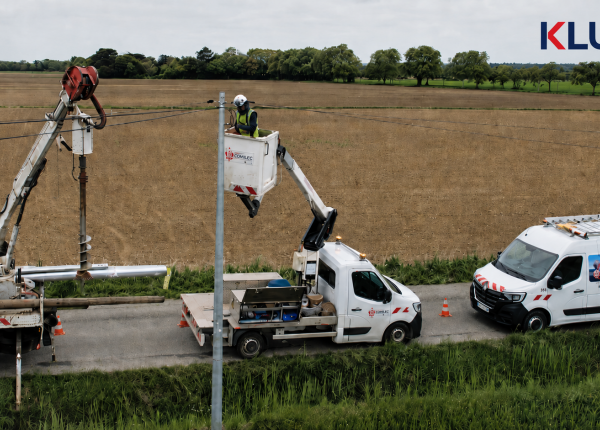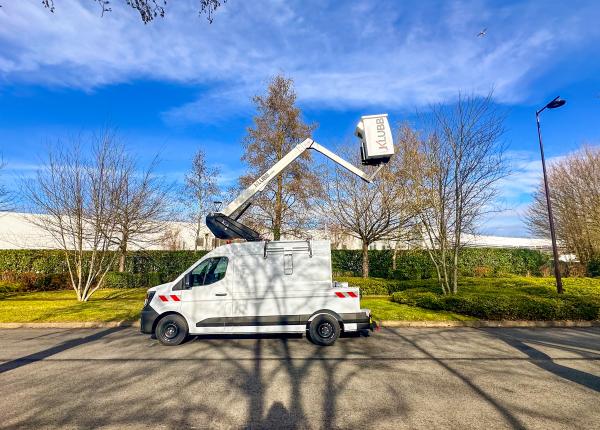







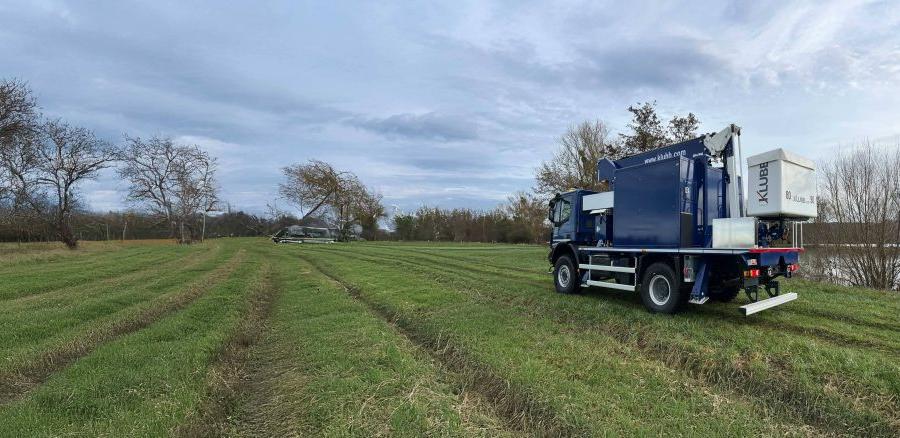
When you arrive on site with a vehicle-mounted MEWP, the temptation is often to get to work straight away. Yet the most serious incidents rarely begin once the platform is already at height. They usually begin before elevation, during set-up, when a weak surface, a poor support position, a passing vehicle, an overhead obstruction or an electrical hazard has not been properly identified. IPAF’s safe-use guidance consistently treats this early stage as decisive, because the quality of the set-up determines the safety of the whole operation.
The checks below should therefore not be seen as a formality. They form a practical framework for carrying out a proper workplace inspection before use. They must then be adapted to the machine you are operating, whether that is a truck-mounted platform, a van-mounted platform or another MEWP configuration, and to the actual site conditions on the day. IPAF’s approach is clear on this point: the machine may be technically compliant, but the operation is only safe if the environment has also been assessed and controlled.
Check the load-bearing capacity and condition of the ground
The first check is not the weight of the vehicle in general terms. It is the capacity of the ground to withstand the concentrated loads imposed at each support point. IPAF’s guidance on ground conditions explains that bearing pressure at outriggers and spreader plates can be far higher than many operators assume, which is why apparently acceptable surfaces can still fail locally.
In practical terms, you should look for anything that may indicate poor support: soft ground, waterlogged ground, recently reinstated areas, uncompacted fill, patched asphalt, rutting, temporary covers, chamber lids or slabs of uncertain strength. HSE reinforces the same operational point by warning specifically about temporary covers, trenches, manholes and uncompacted backfill as causes of overturning. If you have any doubt about the ground, the safest decision is to reposition the machine or use a different method.
Assess the gradient and any crossfall
A site may look almost level and still be unsuitable where the outriggers are actually placed. What matters is not the overall appearance of the carriageway or yard, but the local condition at each support position. IPAF’s ground guidance stresses the need to evaluate the real set-up area rather than rely on assumption or visual impression alone.
The practical rule is simple: aim for the most level position possible and do not rely on improvised compensation when the machine is close to its limits. Slopes, cambers and crossfall reduce your tolerance for settlement and increase the consequences of any weakness in the support arrangement. If the machine settles after deployment, even slightly, the platform should be lowered and the set-up reassessed before work continues. IPAF’s broader safe-use approach supports this idea of dynamic reassessment rather than “set it once and forget it”.
Identify voids, chambers and weak underground points
One of the most deceptive hazards on site is the weak point hidden beneath a surface that appears sound. IPAF’s guidance on supporting structures and ground conditions makes clear that the assessment must consider not only what is visible on the surface, but also what may lie underneath. That is particularly important where there are utility chambers, drainage channels, trench lines, excavation edges or backfilled zones.
A single outrigger bearing on a weak chamber cover or poorly compacted fill can be enough to destabilise the machine. HSE makes the same point in more direct terms by listing trenches, manholes and backfill among the localised features that can lead to overturning. On site, that means your judgement has to extend beyond the visible top layer. If the underlying structure cannot be trusted, the support point cannot be used.
Check the parking and set-up area
Before the machine is stabilised, the full set-up area needs to be checked for suitability. That includes access width, turning space, approach conditions, headroom, nearby structures, ground state, and the room needed not only for the vehicle but for the outriggers, pads, barriers and safe movement around the machine. IPAF’s public-area guidance is especially useful here because it frames MEWP operations as part of a wider managed work zone, not simply as a machine parked beside a task.
Poor positioning at the start often creates a chain of avoidable compromises afterwards: incomplete deployment, reduced clearance, weak traffic separation or awkward manoeuvring at height. That is why the right question is not “Can I stop here?” but “Can I stabilise, operate, protect the public and recover safely from here?” That broader site-planning logic is central to IPAF’s guidance for MEWPs in public areas and alongside roads.
Ensure the outriggers can be fully deployed and properly supported
Once the machine is in position, the outriggers must be deployed in accordance with the manufacturer’s instructions and supported on suitable ground with the correct pads or spreader plates where required. IPAF places strong emphasis on the interaction between machine load, support area and ground capacity. HSE is equally explicit in practical terms: outriggers must be extended and chocked before the platform is raised, and spreader plates may be necessary depending on the manual and site conditions.

In practice, this means checking the full movement and seating of the outriggers, their bearing, the symmetry of the support, and the absence of obstructions such as kerbs, walls, parked vehicles or street furniture. It also means refusing to elevate if a support is only partially effective or is bearing on doubtful ground. A useful site habit is to carry out a controlled low-level functional check after stabilisation, then monitor the supports during the job if weather, water, fill or vibration could affect the ground condition. IPAF’s guidance supports this ongoing vigilance where conditions may change after set-up.
Watch for obstacles and movement at height
Before raising the basket, you need to secure the entire operating envelope of the MEWP, not just the point you intend to reach. IPAF’s public-area guidance and toolbox materials repeatedly underline the importance of planning the movement of the machine as a whole, especially where buildings, signs, branches, structures or third parties are nearby.
The danger does not come only from the basket path. It comes from the full movement of the boom, the outreach, the articulation, the swing and any combined motion in a confined or changing environment. This is often where unexpected trapping, striking or crushing occurs. In these situations, the safest operating rule is clear: slow movements, planned movements and continuous awareness of what lies around and below the platform throughout the task.
Consider traffic and site circulation
For vehicle-mounted MEWPs, one of the greatest external risks is impact from passing traffic or interference from surrounding site circulation. IPAF’s guidance on MEWPs in public areas and alongside roads is particularly relevant here. It stresses that operations near roads, pedestrians and other equipment must be properly planned and that poor positioning can significantly increase the risk of the machine being struck.
In practice, this means creating a clearly controlled work zone with suitable barriers, separation from traffic, pedestrian management and signage that reflects the real conditions on site. The arrangement must stay coherent as the work progresses. A barrier that becomes hidden behind a vehicle, or a lane that now channels traffic too close to the stabilised machine, can quickly turn a sound initial set-up into an unsafe one. IPAF’s approach is not simply to mark out an area, but to manage the public interface of the MEWP operation continuously.
Check for overhead power lines
Power lines are a critical hazard and should be treated as a zero-tolerance issue. IPAF’s dedicated guidance on the safe use of MEWPs in the vicinity of power lines explains that electrocution, electric shock, arcing and flashover can occur when exclusion zones are breached, and that risk increases with voltage. It also makes clear that the danger is not limited to direct contact.
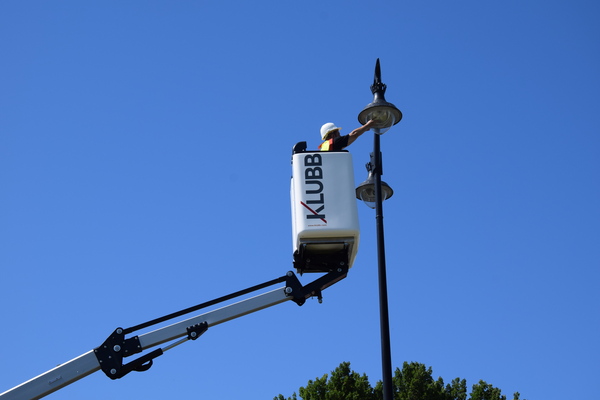
For the operator on site, the essential question is not merely whether a line is visible. It is whether safe clearance can be guaranteed throughout the movement of the boom, platform, load and personnel. If that distance cannot be assured dynamically, then the set-up position, the work method or the control measures must change. This is exactly the type of hazard where a site survey and task planning matter more than operator reaction once the machine is already in motion.
Prepare a rescue plan and emergency procedures
A MEWP operation is not fully planned unless there is a clear method for recovery and rescue. IPAF’s toolbox materials and recovery guidance make this logic explicit: emergency controls, ground controls and auxiliary lowering systems are there to support a planned response, not to replace one. Recovery may be needed because of operator illness, entrapment, machine malfunction or another loss of normal control.
That is why the presence of a competent ground person is often operationally critical. This person helps monitor the surroundings, maintain exclusion zones, react if conditions change and use the lower controls if the operator aloft needs assistance. A rescue arrangement only works if the people on site know the machine, understand the controls and have considered in advance how the operator would be brought down safely. IPAF’s recovery principles strongly support that machine-specific and site-specific preparation.
What do you risk if you carry out no checks before using a vehicle-mounted MEWP?
Risks for operators : serious injury or fatality for the operator in the basket or the person on the ground. In practical terms, the main accident scenarios remain consistent across international MEWP guidance: overturning due to poor ground or support, collision or crushing against a structure, electric shock near power lines, or impact involving passing vehicles and third parties. IPAF’s public-area and power-line guidance both reflect how quickly these events can develop when the site has not been properly controlled before use.
Risks for pedestrians, road users : Without a proper workplace inspection and without barriers or traffic control, the danger is shifted onto people who may not even realise they are entering a hazardous area. IPAF’s public-area guidance is valuable precisely because it reminds operators and duty holders that the machine does not exist in isolation: it interacts with traffic, circulation, buildings and public space.
Risks for employers : If there is an incident, the absence of checks, planning and traceable control measures makes it far more difficult to argue that the work was properly managed. From an international safe-use perspective, the same weaknesses always stand out afterwards: no real site survey, poor ground assessment, incomplete support planning, uncontrolled interface with the public, inadequate electrical precautions or no credible rescue arrangement. Those are exactly the preventable failings that IPAF guidance is designed to address before the platform leaves the ground.
Final point
Do not view this checklist as a mere formality. In practice, it is what allows you to turn an uncertain environment into a controlled one before the platform is elevated. IPAF’s guidance is consistent from one topic to another: safe MEWP use begins with a proper site survey, a real workplace inspection, suitable support conditions, clear control of the surrounding area and a rescue plan that is ready before work starts.
This is exactly where KLUBB platforms fit naturally into the process. The machine may include important built-in safeguards such as emergency controls, emergency stop, emergency lowering and, depending on the model, stabilisation-related safety systems. But those safeguards never replace the site assessment. A well-designed platform may help reduce the consequences of certain mistakes, yet it cannot determine whether a chamber cover will bear the load, whether the work zone is sufficiently protected from passing traffic, or whether safe clearance from an overhead cable will be maintained throughout the task. It is the quality of your checks that makes the operation safe