






When your teams work with van-mounted or truck-mounted MEWPs, the risks they face can vary from one job to another. Unstable ground may compromise the vehicle's stability. Overhead power lines require specific precautions. And when working on public roads, passing traffic and pedestrians introduce further hazards.
All these situations need to be considered as part of your workplace risk assessment. But how do you identify the hazards, assess their significance and document your findings in a way that reflects your teams' working conditions?
Which activities should you assess? How can you develop a risk assessment for your mobile elevating work platforms (MEWPs)? And how do you turn the risks you have identified into effective preventive measures?
This guide takes you through the process, step by step, with practical examples tailored to vehicle-mounted MEWPs.
Why should vehicle-mounted MEWPs be included in your workplace risk assessment?
Under European Directive 89/391/EEC, employers must assess the risks to their workers' health and safety and take appropriate measures to protect them.
If your business uses mobile elevating work platforms, these assessments must take account of the hazards associated with their operation. The directive provides a common European framework, while individual Member States establish their own requirements for documentation and implementation.
You do not necessarily need a separate risk assessment for every MEWP in your fleet. Instead, you can organise your assessment around work activities, groups of employees exposed to similar hazards and the conditions in which they operate. You will still need to account for any machine-specific characteristics that affect safety.
With vehicle-mounted MEWPs, your assessment should cover more than working at height. Driving to the site, positioning the vehicle, setting up the outriggers and extending the boom can all expose your teams to hazards.
Remember to consider the people working on the ground, too. They may be responsible for securing the work area, assisting with manoeuvres or carrying out emergency rescue procedures.
The aim is to understand where risks arise throughout an operation, who might be affected and what you can do to protect them.
For more information on your responsibilities, you can refer to the European Framework Directive 89/391/EEC.
How should you organise your work activities and identify potential hazards?
Start by looking at how your teams use their MEWPs in practice.
Which employees operate the equipment? What types of sites do they work on? And what challenges do they encounter during a typical working day?
Answering these questions will help you group activities with similar risk profiles and identify the situations that need closer examination.
Identify the work activities you need to assess
You can group employees who perform similar tasks or work in environments where they face comparable hazards.
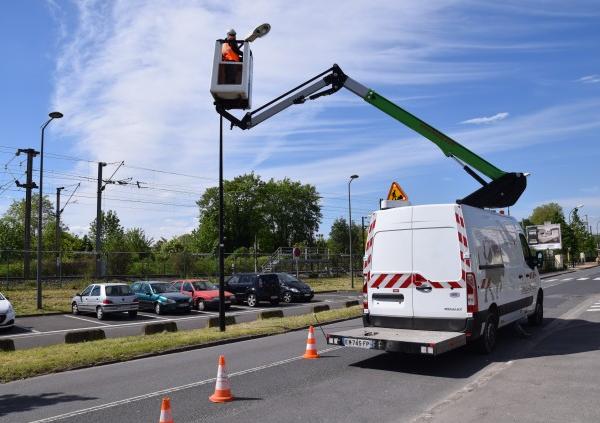
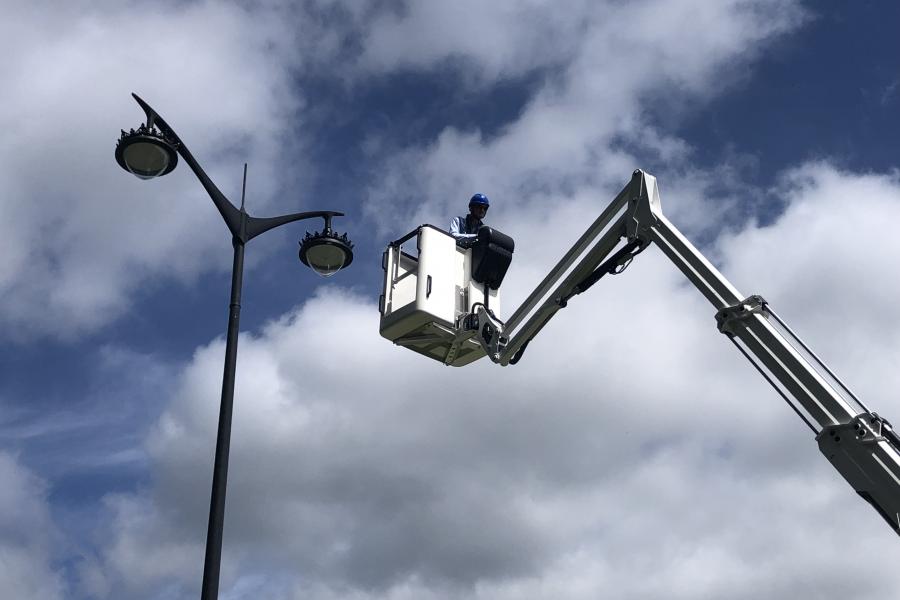
Consider a company using van-mounted MEWPs to maintain street lighting. Its technicians work alongside traffic, near pedestrian areas and sometimes close to electrical infrastructure.
A team responsible for maintaining industrial buildings faces different challenges. Restricted access, overhead obstructions and machinery operating nearby may have a greater influence on their working conditions.
These activities may call for separate risk assessments, even if both teams use MEWPs with similar technical specifications.
Your assessment should reflect the conditions your teams encounter on site.
Involve your operators and site supervisors in the process. Their experience can help you identify practical difficulties, recurring hazards and the precautions already used to manage them.
You can also draw on equipment manuals, inspection reports and lessons learned from previous incidents or near misses.
This approach is consistent with the recommendations of the European Agency for Safety and Health at Work (EU-OSHA), which encourages businesses to involve workers and examine the realities of day-to-day operations when assessing occupational risks.
Break down each operation to identify hazardous situations
Once you have identified the activities concerned, look at each stage of the work.
With a van-mounted or truck-mounted MEWP, the operation starts long before anyone raises the platform. Access to the site, vehicle positioning and ground conditions can all affect the safety of the work ahead.
To organise your assessment, you can divide an operation into the following stages:
| Operational stage | Situations and hazards to consider |
|---|---|
| Travelling to and accessing the site | Road traffic, vehicle manoeuvres, restricted access |
| Parking and positioning | Pedestrians, other contractors, obstructions and traffic |
| Setting up the MEWP | Ground bearing capacity, slopes and outrigger deployment, where applicable |
| Extending the boom | Obstacles, overhead power lines and platform movements |
| Working at height | Falls, ejection, crushing, entrapment and overloading |
| Lowering and stowing | Collisions, trapping hazards and movements around the vehicle |
Breaking down the operation in this way makes it easier to identify when your teams may be exposed to danger.
It also helps you avoid overlooking hazards that occur before or after work at height.
You now have a starting point for building your MEWP risk assessment.
How to Create and Complete a MEWP Risk Assessment
European legislation does not prescribe one universal template for recording occupational risks.
You can use a table, spreadsheet or digital system that suits your organisation. However, you must ensure that your assessment meets the requirements of the national legislation applicable to your business.
For activities involving vehicle-mounted MEWPs, we recommend organising your assessment around the working situations you have identified.
Each entry should help you understand the hazard, the people who may be affected and the precautions needed to manage the risk.
What information should your risk assessment include?
A well-structured assessment makes it easier to document your findings and monitor the actions you take.
The following fields provide a useful framework.
| Assessment field | Information to record |
|---|---|
| Work activity or team | Employees or operational group concerned |
| Task and operational stage | Work being carried out |
| Hazardous situation | Conditions in which workers may be exposed to harm |
| Identified hazard and risk | Source of danger and potential incident |
| Potential consequences | Possible injuries or harm to health |
| Persons at risk | Operators and other people who may be affected |
| Risk rating | Risk level determined using your chosen assessment method |
| Existing control measures | Technical and organisational precautions already in place |
| Additional actions | Further measures, responsibilities, deadlines and follow-up |
You can adapt these fields to your activities and internal procedures.
For example, you may find it useful to record the MEWP model when its technical characteristics affect the level of risk. Outrigger configuration, platform capacity and maximum outreach can all influence how the equipment should be used.
Make sure you distinguish between precautions already in place and measures you still need to introduce. This will help you monitor progress and determine whether your actions are effective.
For further guidance, EU-OSHA provides the Online interactive Risk Assessment (OiRA) framework, which explains how to identify hazards, evaluate risks and develop an action plan.
How should you describe risks associated with vehicle-mounted MEWPs?
When completing your assessment, start with a real working situation.
Think about what could cause an incident, how your employees might be exposed and what the consequences could be.
Imagine your team is using a truck-mounted MEWP to replace a streetlight on a roadside verge. Before deploying the outriggers, the operator needs to check whether the ground can support the loads imposed by the vehicle.
If the ground bearing capacity is insufficient, an outrigger could sink into the surface, causing the MEWP to lose stability.
In your assessment, you could describe the situation as follows:
- Hazard: Ground with insufficient bearing capacity to support the imposed loads.
- Hazardous situation: Setting up a truck-mounted MEWP on unsuitable ground.
- Potential incident: Outrigger subsidence leading to the vehicle overturning.
- Possible consequences: Falls, crushing injuries, serious injury or fatality.
You can apply the same approach to other situations. These might include working close to a building façade, operating near electrical conductors, falling objects or the risk of a collision on a public road.
The technical characteristics of your MEWP should also form part of your assessment.
Maximum platform capacity, horizontal outreach, stabilisation requirements and permitted wind speeds are specified in the manufacturer's documentation. These values define the operating limits you need to respect.
The configuration of your equipment matters, too. A MEWP fitted with outriggers does not have the same set-up requirements as a model designed to operate without them.
As a manufacturer, KLUBB recommends referring to the operating manual for the specific model you use. Technical limits and operating requirements may differ between machines.
You can also consult IPAF's MEWP Ground Conditions guidance, which explains the risks associated with unsuitable ground and the precautions to consider before setting up your equipment.
How can you assess and prioritise the risks you have identified?
Once you have identified the hazards, the next step is to evaluate the risks and decide which preventive measures are needed.
Several factors can help you determine the level of risk:
- Severity: How serious could the consequences be if an incident occurred?
- Frequency of exposure: How often do your teams encounter this situation?
- Likelihood: How likely is the incident to occur under the conditions you have identified?
You should also consider whether your existing control measures are effective.
There is no single risk-scoring matrix required across the European Union. Some businesses use numerical scales, while others classify risks as low, moderate, high or critical.
Choose a method that reflects your activities and that everyone involved in the assessment can understand.
Let's return to the risk of a truck-mounted MEWP overturning.
Even if the circumstances that could cause an overturn are uncommon, the consequences may be fatal. Your assessment needs to reflect that potential severity.
Scoring risks helps you identify priorities and determine where further action is required. However, it does not replace your legal obligations or the operating instructions provided by the manufacturer.
Example: How to complete a risk assessment for a truck-mounted MEWP
Let's return to our street lighting maintenance team.
The truck-mounted MEWP needs to be positioned on a roadside verge containing several underground utility chambers. Before raising the platform, the operator must check the ground conditions and establish whether the surface can support the loads transmitted through the outriggers.
Here is how you could record this situation in your risk assessment.
| Assessment field | Example entry |
|---|---|
| Work activity | Street lighting maintenance |
| Task | Setting up a truck-mounted MEWP |
| Hazardous situation | Outrigger deployed on ground with insufficient bearing capacity |
| Identified hazard | Inadequate ground support beneath an outrigger |
| Potential incident | Outrigger subsidence and MEWP overturning |
| Potential consequences | Falls, crushing injuries, serious injury or fatality |
| Persons at risk | Platform operator and ground personnel |
| Potential severity | Very high |
| Frequency of exposure | To be determined according to site conditions and frequency of operations |
| Existing control measures | To be completed according to current checks and procedures |
| Possible additional action | Establish a formal procedure for checking ground conditions before deploying outriggers |
| Responsible person / deadline | To be defined by the employer |
This example is intended to help you structure your assessment. Risk ratings, existing control measures and additional actions must reflect your actual working conditions.
Once you have documented the situation, you can decide which measures are needed to manage the risk.
For example, you may introduce a ground assessment procedure, establish criteria for selecting a suitable position and provide instructions on the use of outriggers and load-spreading pads.
If the ground cannot support the MEWP in accordance with the manufacturer's instructions, you will need to choose another position or a different working method.
You can follow this process for each hazard you identify.
As your assessment develops, you will build a clearer picture of the risks your teams face and the precautions needed to protect them.
How to Put Your MEWP Risk Assessment into Practice and Keep It Up to Date
You've identified the hazards, assessed the risks and established your priorities. The next step is to decide what action to take and how to monitor the results.
Your assessment should help you improve working conditions and guide decisions about equipment, training and site procedures.
Choose preventive measures that reflect your working conditions
The measures you introduce should address the risks you have identified.
Depending on your operations, these may involve equipment selection, site organisation, operator competence or emergency procedures.
With vehicle-mounted MEWPs, several areas deserve particular attention: operator training, equipment inspections, safe set-up procedures and rescue planning.
Make sure your operators have the training and skills needed to use their equipment safely. They should also be familiar with the controls, operating limits and safety features of the specific MEWP they are using.
IPAF provides internationally recognised training programmes and guidance to help businesses develop operator competence and promote safe working practices.
Equipment inspections are just as important.
Under European Directive 2009/104/EC, employers must ensure that work equipment is maintained in a safe condition and inspected where required. However, inspection intervals and detailed requirements are determined by national regulations.
These inspections should not be confused with the checks your operators need to carry out before using a MEWP.
You can refer to IPAF's inspection guidance, which covers pre-use checks, periodic examinations and equipment maintenance.
Remember that some hazards require precautions tailored to the site.
For example, if your teams are working close to overhead power lines, you will need to consider electrical hazards, applicable safety clearances and the suitability of the equipment.
Working alongside traffic brings another set of challenges. You may need to introduce traffic management measures, establish exclusion zones or restrict access to the working area.
Emergency rescue arrangements also deserve careful planning. Before work begins, make sure you have a rescue plan suited to the equipment, the task and the site. The people involved should understand their responsibilities and know how to respond.
For additional guidance, consult IPAF's Principles of MEWP Recovery and Rescue.
For each preventive action, identify who will be responsible, when it should be completed and how you will assess its effectiveness.
When should you review your MEWP risk assessment?
Your working conditions will change over time.
You may introduce a new MEWP model, undertake projects on unfamiliar sites or change how your teams organise their work. Any of these developments could introduce hazards or alter the risks you have already assessed.
That's why it is important to review your assessment and check whether it still reflects your operations.
Under the European occupational health and safety framework, employers must take account of changing circumstances and adapt their preventive measures.
The precise requirements for documenting and reviewing risk assessments vary between EU Member States. You should therefore check the rules applicable in the country where your teams operate.
Consider reviewing your assessment whenever you:
- Introduce new equipment or change an existing MEWP configuration.
- Take on activities involving different working environments.
- Change operating procedures or team responsibilities.
- Identify a new hazard following an incident or near miss.
- Receive information that calls existing safety measures into question.
It is also important to distinguish your general workplace risk assessment from the checks carried out before a particular job.
Your workplace risk assessment covers the hazards associated with your business activities. A site-specific assessment helps you determine whether the planned operation can be carried out safely under the conditions at that location.
For a vehicle-mounted MEWP, this means considering the required working height, horizontal outreach, platform capacity, ground stability and access restrictions.
You also need to check that the selected machine is suitable for the task and can operate within the limits specified by its manufacturer.
If you identify a hazard that was not covered by your existing assessment, use what you have learned to review the risks and improve your preventive measures.
Involve your teams in this process. Their feedback can help you understand how working conditions are changing and whether the measures introduced are effective.
EU-OSHA's risk assessment guidance provides further advice on reviewing assessments and monitoring preventive action.
Build Your MEWP Risk Assessment Around Real Working Conditions
A useful risk assessment starts with understanding how your teams work.
Look at their activities, identify the hazards they encounter and assess the circumstances in which they may be exposed to harm. From there, you can establish priorities and introduce measures that reflect the conditions on site.
Your knowledge of the equipment also plays an important role. Working height, horizontal outreach, platform capacity and stabilisation requirements all influence how a van-mounted or truck-mounted MEWP can be operated safely.
At KLUBB, we draw on our experience as a manufacturer of vehicle-mounted access platforms to help professionals understand their equipment and its operating requirements.
By combining this technical knowledge with a thorough understanding of your working conditions, you can make more informed decisions and provide your teams with the precautions they need to work safely.