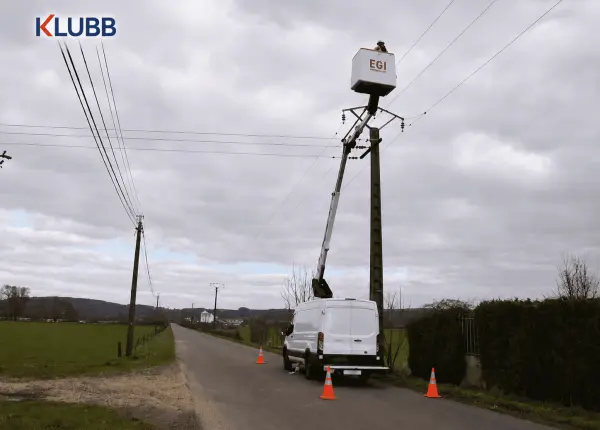






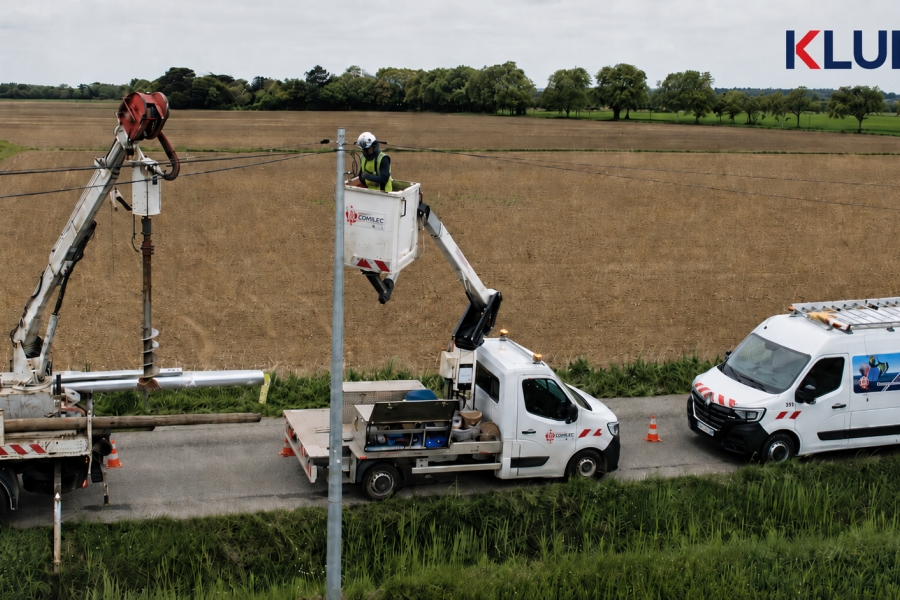
Subcontracting work at height is common across utilities, telecommunications, street lighting, tree care, building maintenance and infrastructure services.
A contractor may be appointed to carry out the work and then entrust part of the operation to a specialist company using its own mobile elevating work platform (MEWP).
But subcontracting does not transfer every health and safety responsibility to one party. In practice, responsibilities are shared between the organisation controlling the worksite, the main contractor, the subcontractor and the employer of the MEWP operator.
The precise legal requirements vary from one country to another. However, European legislation and international occupational safety frameworks establish several principles that provide a useful basis for understanding how responsibilities should be allocated.
Subcontracting does not remove responsibility
Across the European Union, the general principle is that employers remain responsible for protecting their own workers.
Where employees from several companies share a workplace, employers must cooperate, coordinate their occupational risk-prevention measures and exchange relevant information about the hazards created by their respective activities. This principle is established by the European Framework Directive 89/391/EEC.
A similar principle exists internationally.
The International Labour Organization’s Occupational Safety and Health Convention No. 155 establishes a broad framework under which workplaces, machinery, equipment and working processes should be safe and without risk to health, so far as reasonably practicable. Where two or more organisations operate simultaneously at the same workplace, cooperation on occupational safety and health becomes an essential part of risk management.
This creates an important distinction:
coordination can be shared, but each employer retains responsibility for the matters under its control.
The organisation controlling the site must manage site-related risks
The company or organisation controlling the worksite is generally best placed to identify hazards linked to the environment in which the MEWP will operate.
Before an operation begins, relevant information should therefore be exchanged between the parties involved.
Depending on the site, this may include:
- vehicle and pedestrian traffic;
- underground services and ground conditions;
- overhead power lines;
- restricted access areas;
- nearby structures or obstacles;
- other contractors working within the same area;
- emergency and rescue arrangements.
This information allows the MEWP contractor to assess whether the planned operation can be carried out safely and determine how the machine should be positioned and used.
For operations involving several employers, site safety cannot therefore be considered solely from the perspective of the company operating the platform. Hazards created by the working environment and by interactions between contractors must also be taken into account.
The subcontractor remains responsible for its operators
Where a subcontractor employs the MEWP operator, that employer remains responsible for ensuring that the worker has received appropriate training and is competent to operate the equipment assigned to them.
At European level, Directive 2009/104/EC on the use of work equipment requires workers entrusted with the use of work equipment to receive adequate training, including training relating to the risks associated with its operation.
At international level, ISO 18878:2025 — Mobile elevating work platforms — Operator training provides requirements for the content and administration of standardised MEWP operator training.
The standard also recognises an important limitation: national or other regulations may impose additional or more stringent requirements.
There is therefore no single operator licence or authorisation system that applies worldwide.
Depending on the country, additional certification, employer authorisation, medical requirements or documented competency assessments may be required.
Training alone is not enough
An operator may be trained to use MEWPs without being familiar with every machine, configuration or worksite.
Before work begins, the employer should therefore ensure that the operator understands:
- the MEWP being used;
- its operating controls and safety systems;
- its working envelope and rated capacity;
- stabilisation requirements where outriggers are fitted;
- emergency lowering procedures;
- manufacturer instructions;
- hazards specific to the worksite.
This distinction becomes particularly important when a subcontractor uses a MEWP supplied by another organisation or operates a model that differs from the machines normally used by its workforce.
Competence should therefore be considered in relation to both the equipment and the task being performed.
Who is responsible for selecting the MEWP?
Choosing the correct machine is another central part of the operation.
European requirements on work equipment establish that employers must select equipment that is suitable for the work to be carried out, taking into account the specific working conditions and the risks present at the workplace.
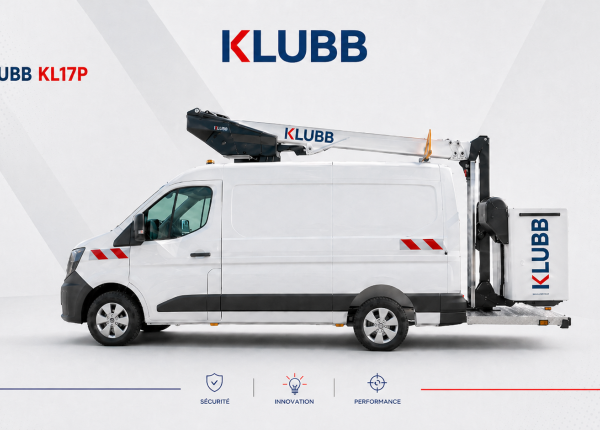
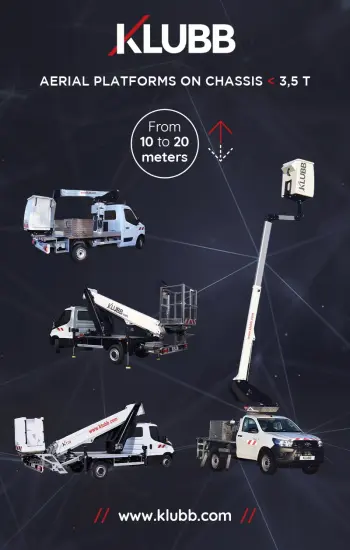
For a vehicle-mounted MEWP, this means looking beyond working height alone.
The assessment may need to consider:
- required working height;
- horizontal outreach;
- basket capacity;
- number of operators;
- vehicle dimensions;
- available positioning space;
- ground conditions;
- stabiliser footprint;
- overhead obstacles;
- electrical hazards;
- traffic conditions.
A 20-metre working height, for example, does not automatically make a machine suitable for an operation requiring significant lateral outreach or positioning within a narrow street.
Equipment selection therefore forms part of the wider risk-management process.
Responsibility becomes more complex when the MEWP is supplied by another company
A relatively straightforward arrangement exists when the subcontractor provides the MEWP, employs the operator and carries out the work.
Responsibilities become more distributed when the machine belongs to the main contractor, the client or a rental company.
In such situations, the parties should establish clearly:
- who selected the MEWP;
- who owns or supplies it;
- who is responsible for its maintenance and inspections;
- who employs the operator;
- who has verified operator competence;
- who provides machine-specific information;
- who controls the worksite;
- who coordinates the operation.
These roles should be established before the platform is put into operation.
A contractual arrangement may allocate specific duties between organisations, but it should not be assumed that a contract automatically overrides occupational safety obligations applicable in the country where the work takes place.
The MEWP itself must be suitable and safe to use
Within the European Union, work equipment must be suitable for its intended operation and used under conditions for which it is appropriate.
For MEWPs placed on the European market, EN 280-1:2022 is the principal European standard covering design calculations, stability criteria, construction, safety requirements, examinations and testing.
However, machine conformity and safe operation are two different issues.
A compliant MEWP can still be used unsafely if, for example, it is incorrectly positioned, operated outside its permitted working envelope, used on unsuitable ground or operated by personnel who have not received adequate training.
Equipment compliance is therefore only one part of the overall safety process.
A risk assessment should define how the operation will be carried out
Before the MEWP is deployed, the companies involved should identify the hazards associated with the operation and determine the measures required to control them.
For a typical vehicle-mounted MEWP operation, this may cover:
- access to the working area;
- traffic management;
- machine positioning;
- ground bearing capacity;
- stabilisation;
- overhead power lines;
- working height and outreach;
- weather conditions;
- falling-object risks;
- emergency procedures;
- communication between personnel.
Where several contractors work simultaneously, these assessments cannot be carried out in isolation.
Information about the worksite, the equipment and the activities of other contractors needs to be shared so that risks arising from their interaction can also be addressed.
Four questions should be answered before the work starts
Although regulations differ between countries, a clear allocation of responsibilities can begin with four simple questions.
Who controls the worksite?
This party is usually best placed to communicate site-specific hazards and coordinate activities taking place within the working area.
Who employs the operator?
The employer is normally responsible for ensuring that its worker has the competence, training and information required to perform the task safely.
Who provides the MEWP?
This helps determine responsibility for machine condition, documentation, maintenance, inspections and equipment-specific information.
Who plans and supervises the operation?
The organisation directing the work must ensure that the selected method, equipment and working conditions are compatible with the task.
There is no universal subcontracting procedure for work at height that applies identically in every country.
There is, however, a consistent principle running through European and international occupational safety frameworks: subcontracting requires coordination, but it does not eliminate the responsibilities of the organisations involved.
For MEWP operations, safe execution depends on clearly defining who controls the site, who employs and trains the operator, who provides the machine and who is responsible for planning the work.
When these responsibilities are established before the platform arrives on site, the equipment, operator and working environment can be assessed as part of a single operation rather than as separate elements.